Farm produce: from harvest to buyer in one leg
11 August 2026 · 8 min read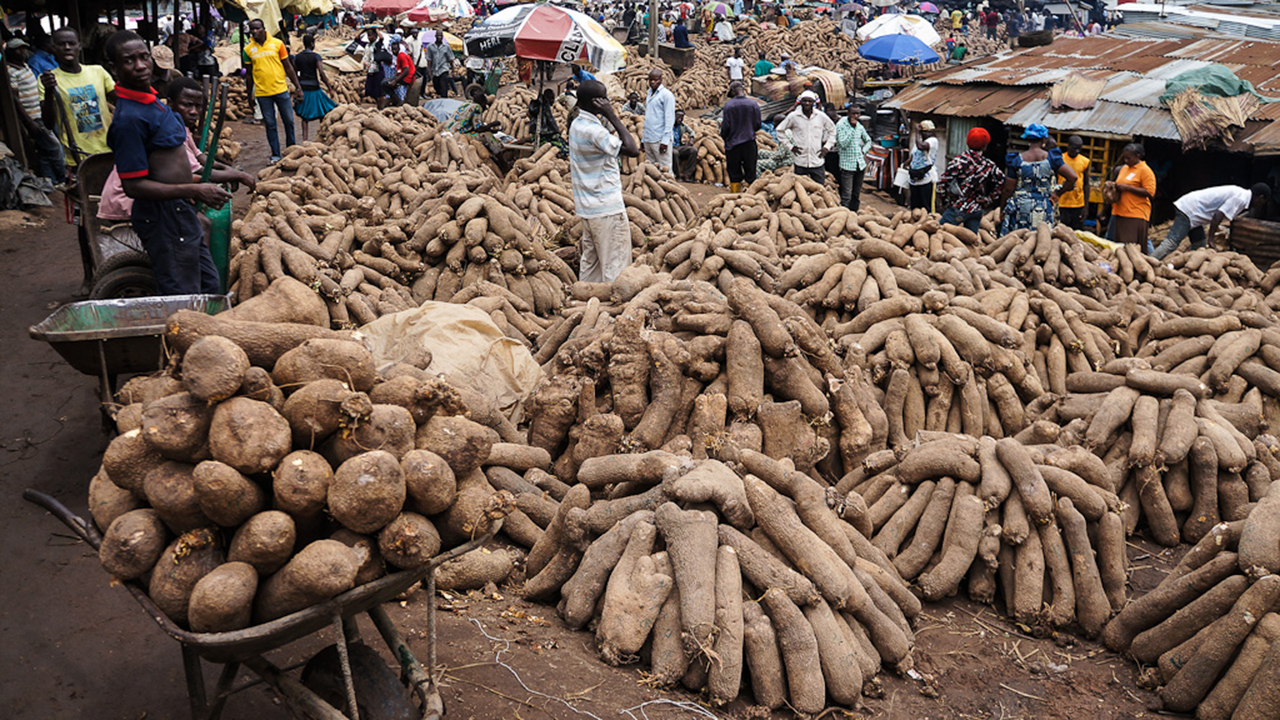
Up to 40% of Nigeria's fresh produce spoils before anyone eats it. Shorter last-mile trips are part of the answer.
Nigeria is the world's largest producer of yam. According to the FAO figures reported by Premium Times, it grew about 61 million tonnes in 2022, roughly 69% of the global total. It is also one of Africa's biggest tomato growers, with more than 200,000 smallholder farmers in the crop, according to Cornell University's agriculture college.
Growing is not the bottleneck. Moving the harvest is.
For a farmer, a basket of tomatoes or a pile of yam tubers is a season of work. Every hour it waits for a truck, a buyer or a market stall is an hour it loses value. This article looks at what the evidence says about how much is lost, why, and what a shorter route from farm to buyer can and cannot fix.
How much food is lost before it reaches a shop?
The most reliable global yardstick is the FAO's Food Loss Index, which tracks food lost between harvest and retail. Its latest figures, for 2023, put the world average at 13.3%. Sub-Saharan Africa sits at 23.0%, more than double the 10.0% recorded in Northern America and Europe. Fruit and vegetables are the worst-hit food group, at 25.4% worldwide.
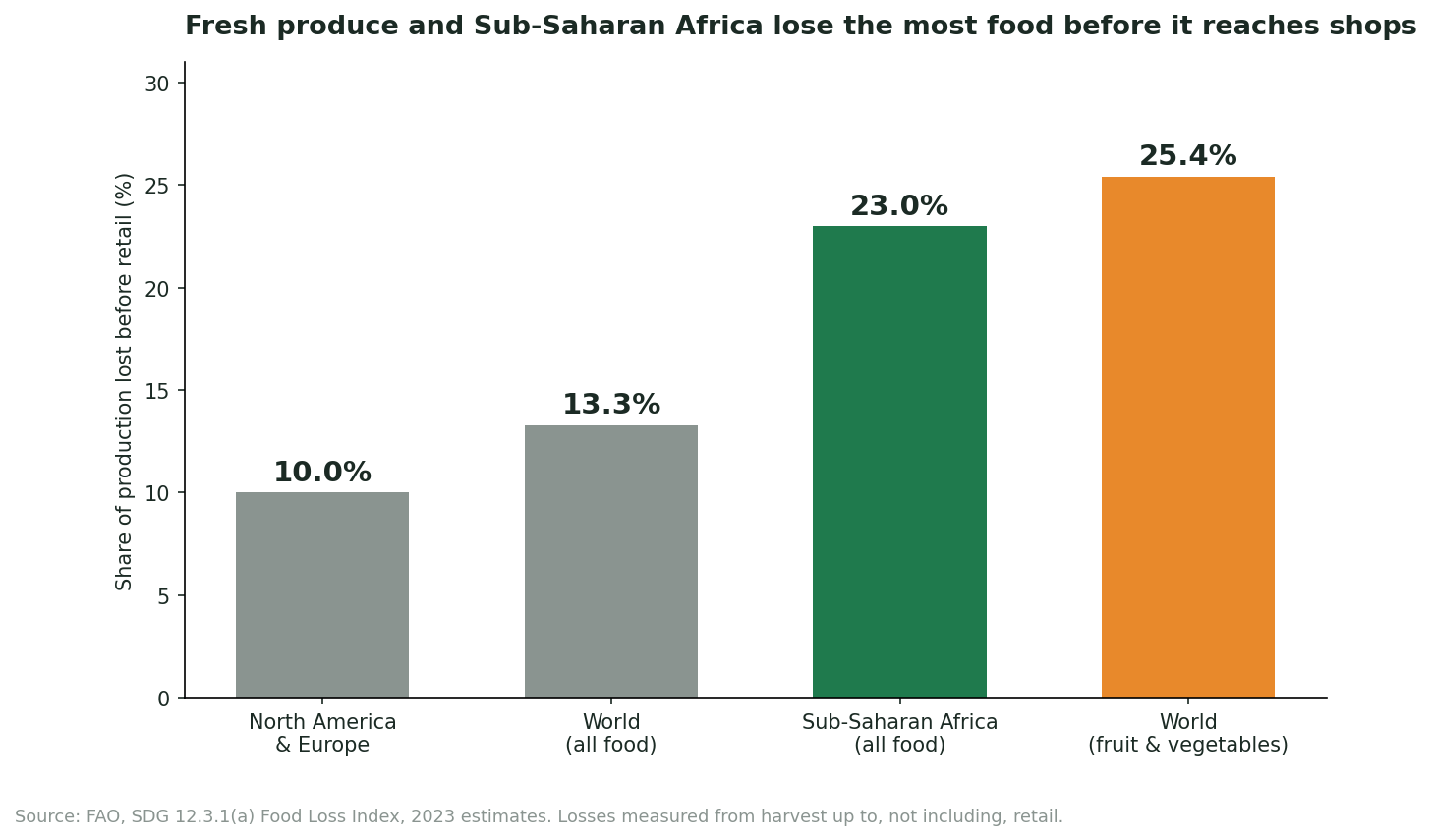
Source: FAO, SDG 12.3.1(a) Food Loss Index, 2023 estimates.
Nigerian figures are higher and less settled. A fact sheet that draws on FAO and Nigerian survey work reports 20-30% losses for grain and 30-50% for roots and tubers, with fruit and vegetables often higher still. The Nigerian Stored Products Research Institute (NSPRI) has estimated losses of around 50% for fruit and vegetables.
These are estimates, not audited totals. Surveys differ on what counts as a loss (thrown away, or sold cheaply because it is bruised), and on where it is measured. That matters, and we come back to it below.
Why perishables lose the race against time
Fresh produce does not wait. Heat, rough handling and slow travel all take a toll, and the damage compounds at each stage.
Three problems show up again and again in the research:
- Handling damage. Crates are overloaded, produce is stacked too high, and every extra loading and unloading adds bruises.
- Slow, unpredictable transport. One academic review notes that around 75% of Nigeria's rural population lacks access to an all-season road network, which pushes up transport costs and travel times.
- No cold storage. Without cooling, field heat stays in the produce and shortens its life.
The cost of getting goods to market is also built into the price the buyer pays. A 2023 BusinessDay report on tomato prices cited transport costs from northern Nigeria to Lagos of roughly ₦3.1-3.3 million per truck. Those figures are dated and prices have moved since, but the point stands: distance and delay are expensive.
Yam: the staple that has to survive the journey
Yam is the clearest example of Nigeria's scale. Zaki Biam market in Benue State accounts for about 70% of the yam grown in the country, with more than 200 trucks loading around two million tubers every week, according to Premium Times.
Yam keeps better than tomatoes, but it is far from loss-proof. A study of 240 yam farmers in Benue State found that about 80% lost between 20% and 49.9% of their harvest, with erratic rain and a lack of improved storage among the drivers. Another Benue study lists pests, heat, sun exposure, poor handling and poor transport among the causes.
Government officials acknowledge the scale of the problem. At a 2026 root and tuber conference in Abuja, the federal government said Nigeria produces over 60 million tonnes of cassava and yam and that lost harvest is the central challenge. The minister argued that even a 10% cut in losses would put more food on the market and ease prices.
Tomatoes: a crop that cannot wait
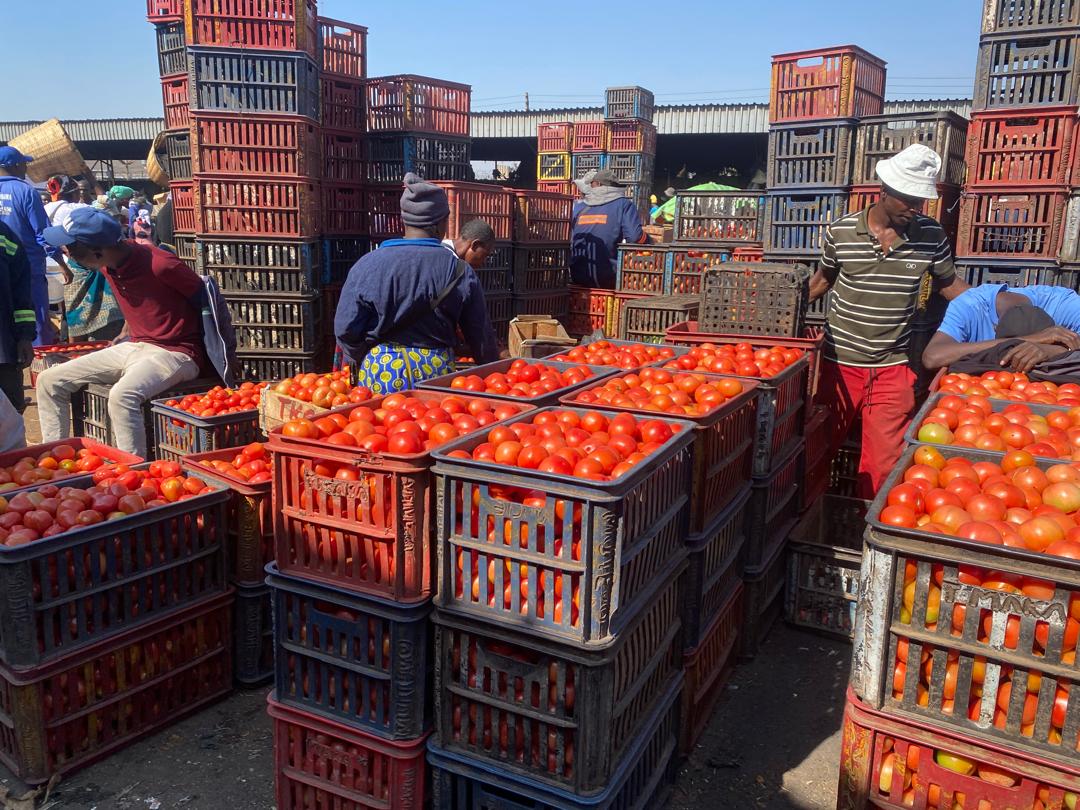
Tomatoes are among the most perishable crops in the country, and the numbers reflect it. Estimates of loss vary enormously, from a farm survey finding under 1% to reviews quoting 65%.
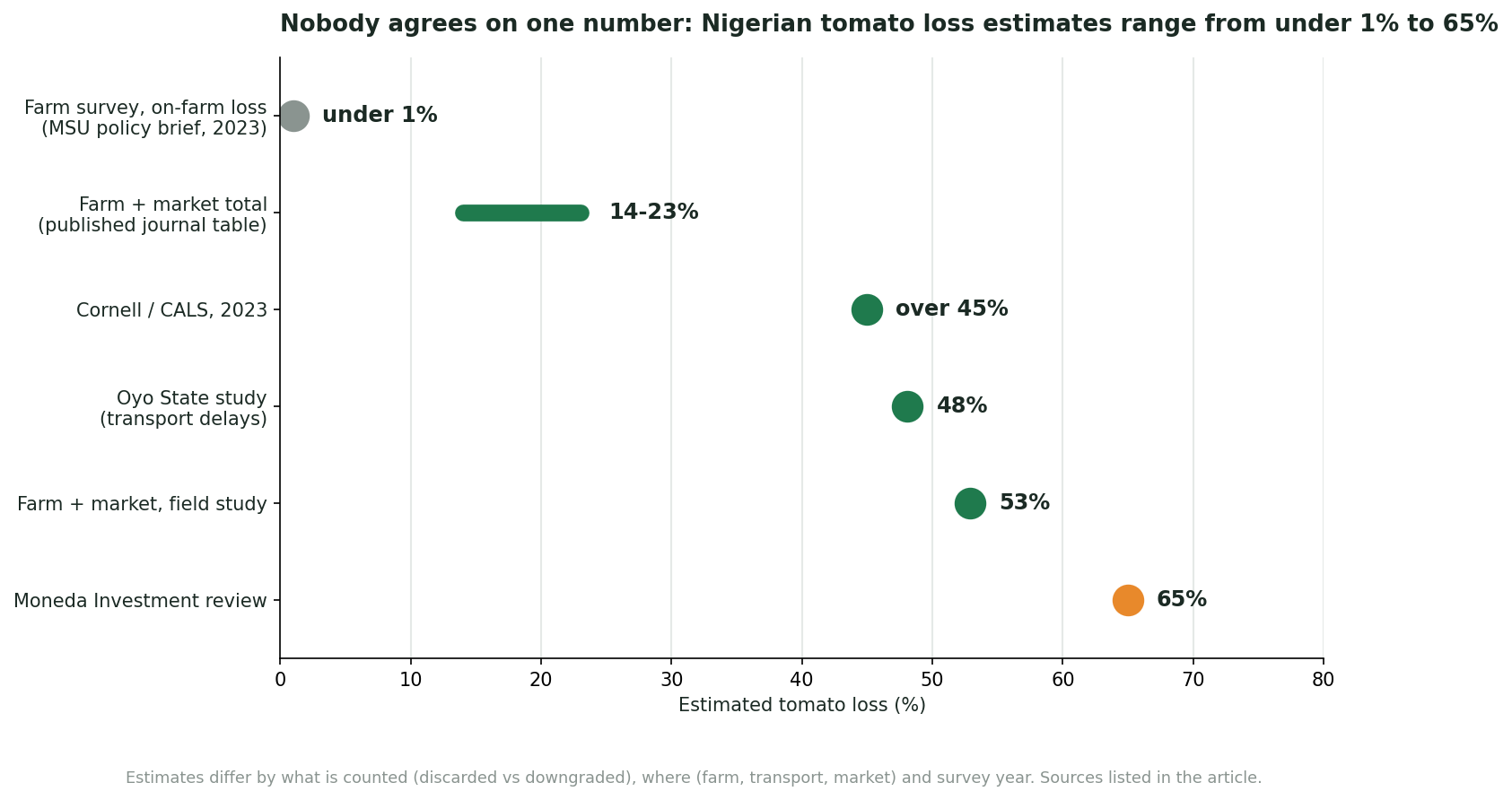
Sources: MSU policy brief on Nigerian tomato farms (2023); published journal table of fruit and vegetable losses; Cornell CALS (2023); Oyo State study; Moneda Investment review. Full links at the end.
Why such a spread? A 2023 policy brief from Michigan State University found that on the farm itself, tomato losses were below 1% of harvests, and more than half of what farmers called "lost" was actually sold at a reduced price. It also found that 83% of farmers named damage during harvesting or handling as the main cause of loss, and only 17% named an inability to sell.
That does not contradict the higher figures. It explains them. Losses concentrate after the farm gate, in transport and in markets, and damage from handling is the biggest single cause. One field study put combined farm and market losses at about 53%, with almost all of that happening at the market stage. A study in Oyo State attributed 48.1% tomato spoilage largely to transport delays.
The practical lesson is simple. Anything that reduces handling steps and shortens the time between harvest and buyer attacks the main cause directly.
The long road: farm, aggregator, market, hawker, home
Most Nigerian produce travels through a chain of intermediaries. Farmers sell at the farm gate to aggregators, who collect produce in crates and organise trucks to big wholesale hubs such as Mile 12 in Lagos. From there it moves to retailers and hawkers, and finally to the household.
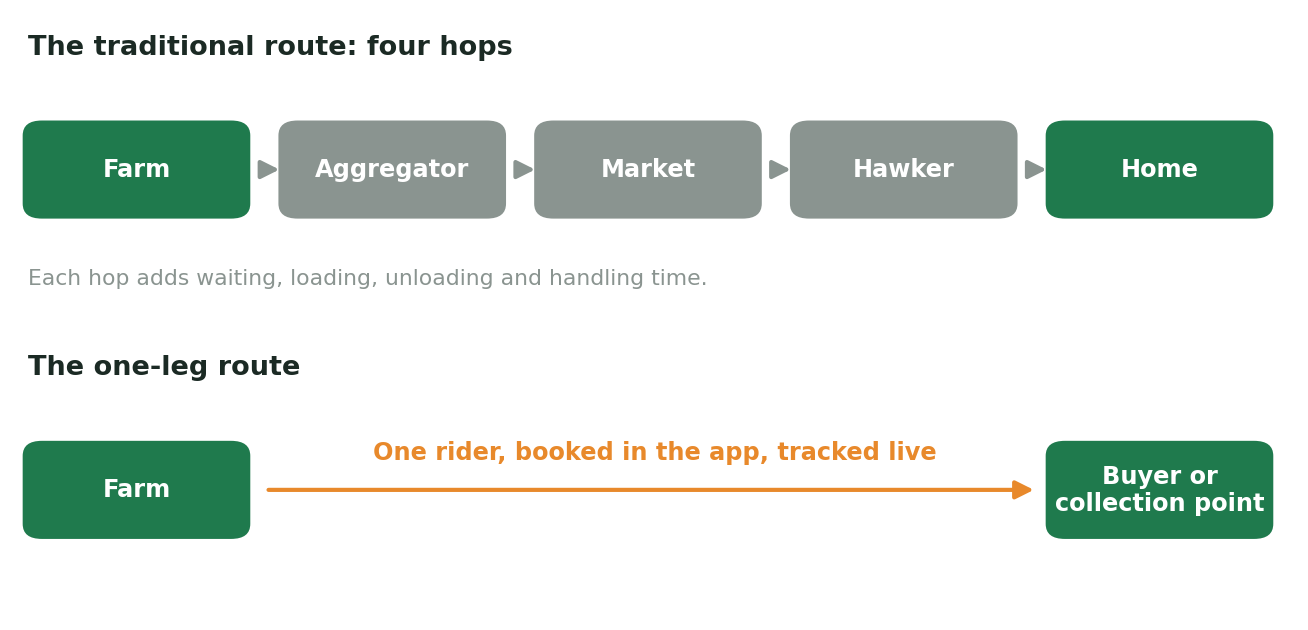
Intermediaries do real work. They finance trips, absorb risk and move large volumes, and a recent Naija AgroNet series argues that blaming "the middleman" misses how costly and risky the chain is for everyone in it. The issue is not who is in the chain. It is how many times the produce is handled and how long it waits.
There is evidence that cutting steps pays off. Solidaridad, an international development organisation, set up aggregation centres in Kano State where farmers bring produce to a single point and buyers come to them. One tomato farmer who used to sell only about 20 of his 35 crates reported earning roughly 40% more after the centre opened, because he sold more of what he grew and paid less to move it.
What a one-leg trip changes
SEIRS applies the same logic to the last stretch of the journey. A farmer or market seller books a rider directly from the app, whether that is an okada, keke, car, van or truck depending on the load. The buyer follows the trip live on a map, and payment is held until delivery, so both sides are protected.
For produce, three things matter:
- Fewer hops. Moving from farm to buyer in one leg instead of passing through several hands means fewer loading and unloading steps, which is where handling damage happens.
- Less waiting. A booked rider collects on the farmer's schedule instead of the produce waiting for a truck to fill.
- Neighbourhood collection points. Partner stores can hold an order so a working customer does not miss a perishable delivery.
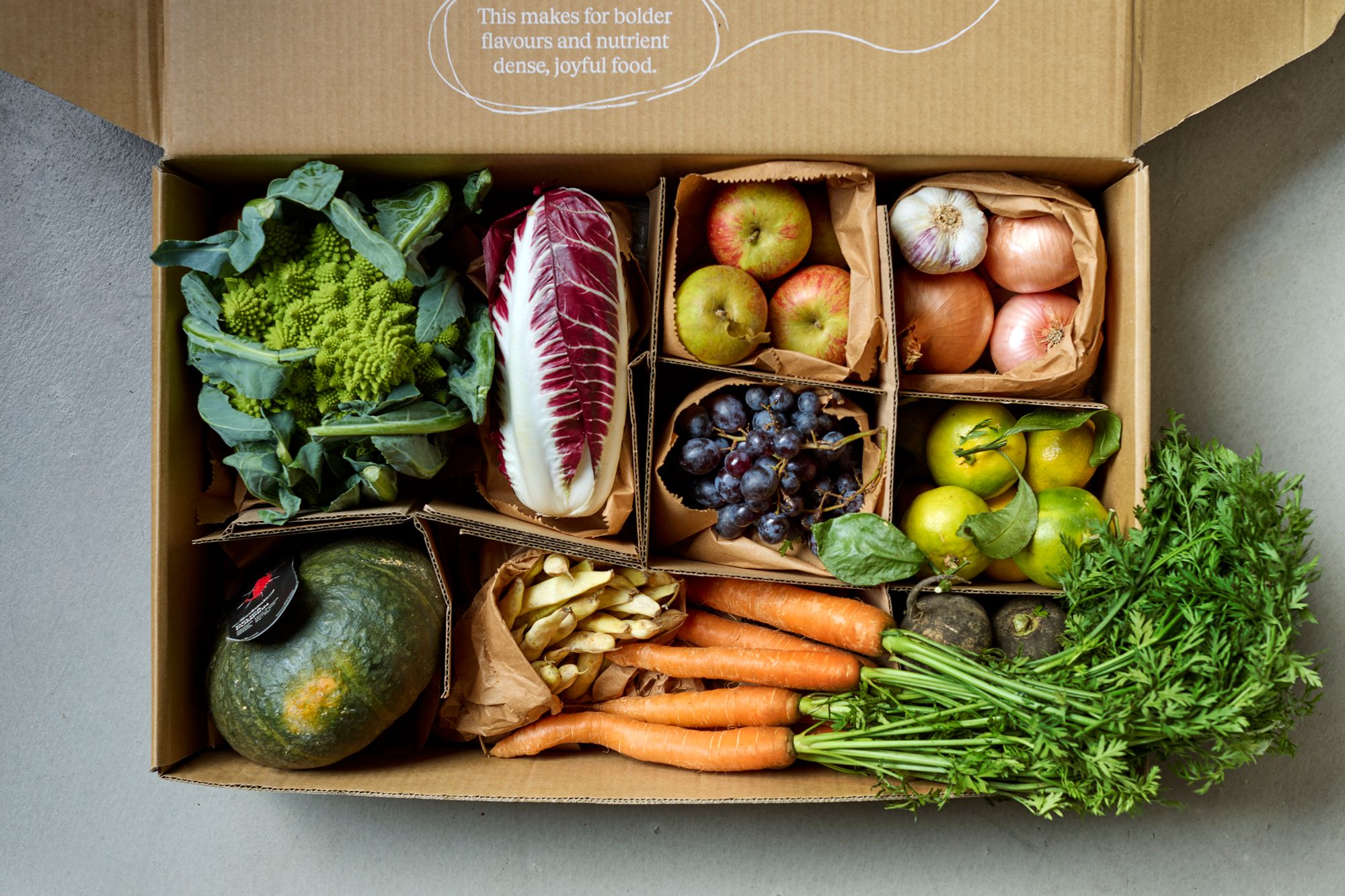
Small, well-packed boxes travel easily by rider and are simple to collect from a partner store.
What a rider cannot fix
We will not pretend an okada solves the cold-chain problem. Refrigerated storage, better roads and proper crates all matter, and some of that needs public and private investment well beyond any one platform.
But the evidence points the same way. Losses build up where produce is handled many times and waits too long. Cutting four hops down to one will not fix everything, and it will keep real food, and real income, out of the waste heap.
Move produce with SEIRS
If you farm, run a market stall or sell fresh food, you can book a rider in the SEIRS app and track the trip to the buyer. See how it works or get in touch.
Sources
1. FAO, SDG Indicators Data Portal, 12.3.1 Global food losses (Food Loss Index, 2023)
2. Cornell CALS, "Bending the curve of tomato loss can help Nigerian farmers, reduce poverty" (2023)
3. Michigan State University, Policy Brief "Little Is Lost: Evidence from Nigerian Tomato Farms"
6. Journal of Agripreneurship and Sustainable Development, farm-level yam losses in Benue State (2020)
8. NAN, "Nigeria largest global producer of root, tuber crops" (2026)
9. Dawn Commission, "Reducing Post-Harvest Losses in Southwest Nigeria" (2025)
11. Moneda Investment, "The African Perspective: Post-Harvest Losses"
12. Springer, Food Security, market channels and tomato handling practices in Nigeria
13. BusinessDay, "Seasonality, high transport costs responsible for tomato price surge"
14. Naija AgroNet, "Nigeria's Harvest Paradox, Part II" (2026)
16. Kwpublications, cold-chain logistics for tomato distribution in Nigeria (rural road access)